

Temptation bundling pairs a “should” activity with a “want” activity and, in its strongest form, reserves the want for the should. Listen to a favorite audiobook only while walking, watch one show only while folding laundry, or buy a preferred coffee only during a difficult weekly review. The pair should make starting easier without competing with the task.
The pairing rule
Choose:
a should with delayed benefits and low immediate appeal
a want with immediate appeal
a context where both can happen safely and well
Then write:
I may enjoy [want] while I do [should].
Stronger commitment version:
I reserve [want] for [should] during the next two weeks.
Do not reserve something essential, socially important, or likely to create distress.
The original field experiment
Milkman, Minson, and Volpp introduced and tested temptation bundling in a field experiment involving gym attendance and tempting audiobooks. Participants with gym-only access to the audiobooks initially visited more often than a control group, but the effects declined over time, particularly around a holiday disruption.
That pattern matters. The bundle helped, but context and novelty affected durability. A bundle is not a permanent motivation engine.
The study also focused on one pairing in one setting. It supports the concept; it does not validate every productivity combination.
Use the compatibility test
A good want occupies a channel the should does not need.
Often compatible:
audiobook + walking
music + routine cleaning
favorite cafe + weekly planning
pleasant candle + paperwork
social company + meal prep
Often incompatible:
podcast + complex reading
television + driving
social media + any task needing return
rich narrative audio + writing
difficult conversation + entertainment
If output quality drops, the want is not a reward; it is a competing task.
Choose a should with a clear boundary
Good:
30-minute walk
fold one laundry basket
reconcile this month’s receipts
complete the weekly review checklist
practice scales for 20 minutes
Too broad:
get fit
clean the house
be productive
fix finances
The bundle should know when it has happened.
Choose a want that remains enjoyable
The reward should not become:
another obligation
expensive enough to create regret
unsafe in the context
difficult to stop
dependent on violating a relationship agreement
Small wants often work:
a specific playlist
an audiobook series
a preferred location
a warm drink
a comfortable setup
a low-stakes social companion
Example: a household bundle
Morgan dislikes folding laundry and enjoys one comedy podcast.
Plan:
If a clean basket is ready after dinner, then I will play the next episode while folding. I will stop the episode when the basket is empty.
The physical task does not need language processing, and the episode has a clear pairing. If laundry ends first, Morgan pauses the audio rather than finding more chores to justify it.
Example: a bundle that fails
Rae pairs a favorite crime audiobook with writing a research report.
Both require language, memory, and narrative attention. Rae rereads paragraphs and misses the plot. The bundle makes both experiences worse.
Revised:
audiobook only during the walk to and from the library
instrumental playlist during writing
The new pair supports arrival without competing with composition.
Add an if-then cue
Temptation bundling still needs a start.
If I put on walking shoes after lunch, then I will start the saved audiobook and walk until the 20-minute timer ends.
The implementation-intentions guide explains how to choose visible cues and executable responses.
Run a two-week test
Track:
number of opportunities
number of starts
whether the should output remained good
whether the want remained enjoyable
whether the effect faded
At the end, choose:
keep the bundle
rotate the want
loosen the restriction
change the should
stop because it does not help
Do not preserve a bundle because the theory sounds clever.
Use the bundle for entry, not the entire task
For attention-demanding work, use a want to reach the environment:
preferred coffee only at the library
favorite playlist during project setup
brief social check-in before parallel work
Then remove the want when deep attention begins. The bundle can carry you to the doorway without entering the room.
Put it into the calendar
In Ellie, create the should task, attach the bundle in the note, and place it where the want is available. “Audiobook walk” is easier to act on at lunch than as an undated intention.
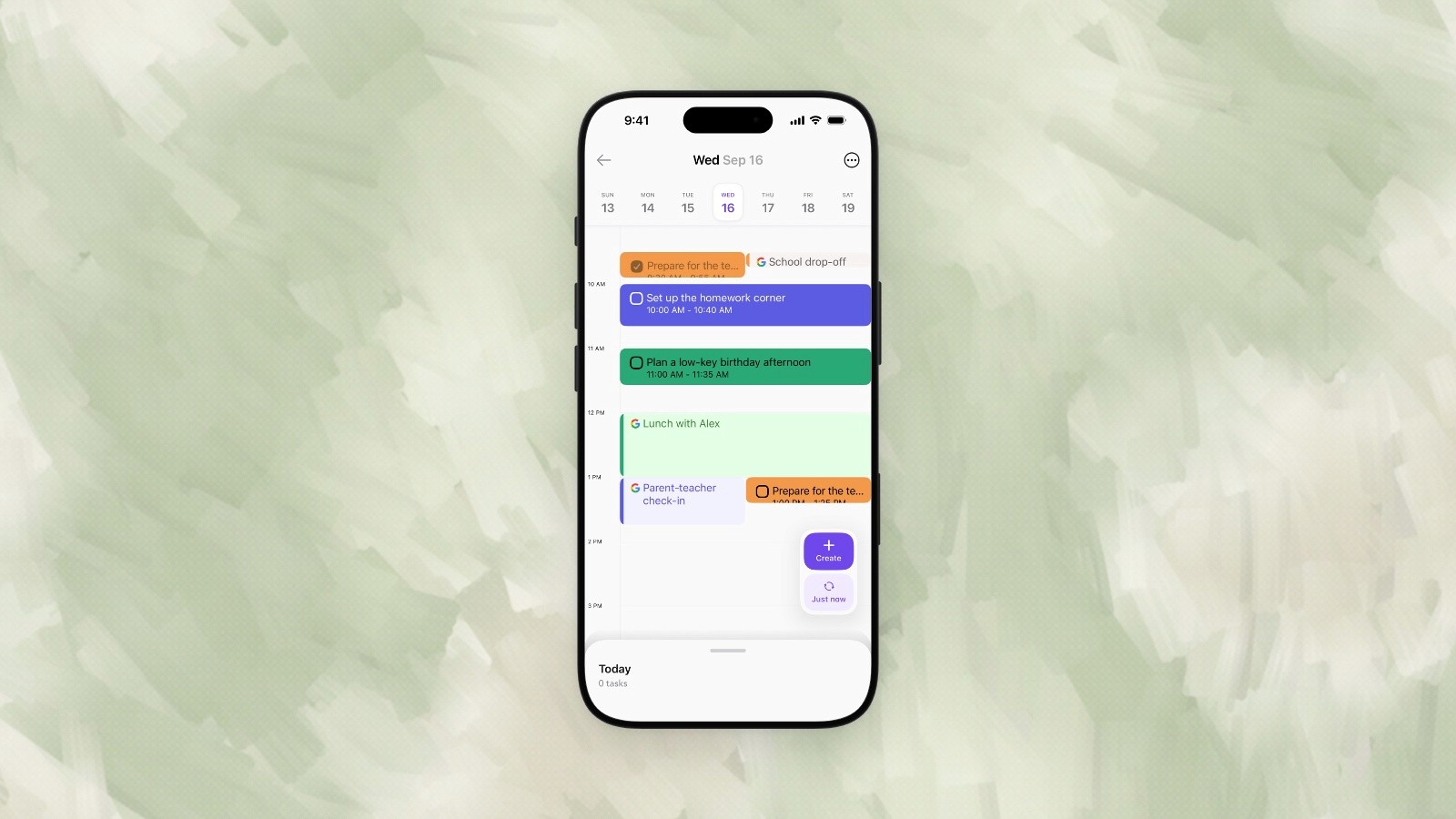
Give the planned activity an actual time window. Ellie Timebox is shown here with demo tasks.
When not to use temptation bundling
The task involves driving, safety, or full attention.
The want undermines sleep, finances, health, or relationships.
The reward becomes compulsive or hard to stop.
The pairing lowers learning or work quality.
The should needs emotional processing.
You are using a reward to push through genuine exhaustion.
Frequently asked questions
Is temptation bundling the same as habit stacking?
No. Habit stacking links a new behavior to an existing cue or routine. Temptation bundling links an immediately enjoyable experience with a delayed-benefit behavior. They can be combined.
Must I restrict the reward to the task?
Restriction can strengthen the bundle, but a simple pairing may be easier and kinder. Test what increases starts without making leisure feel controlled.
What if the reward loses its appeal?
Rotate it, loosen the bundle, or stop. The original study’s effects declined over time, so fading novelty is not surprising.
Can food be the temptation?
It can be, but food is emotionally and medically complex. Avoid using restriction or reward in ways that conflict with health needs or eating-disorder care.
Sources
Milkman, Minson, and Volpp, “Holding the Hunger Games Hostage at the Gym: An Evaluation of Temptation Bundling”, Management Science (2014).
Full author manuscript: Wharton-hosted PDF.
Plan a day that can breathe
Ellie keeps tasks beside your calendar, so you can see your real capacity before the day fills up.
